5 Hidden Gems Near Casa Pace e Gioia: Art, History & Unforgettable Meals

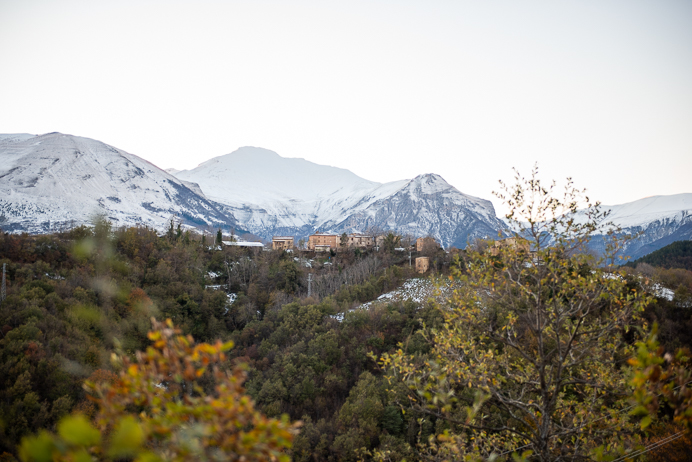
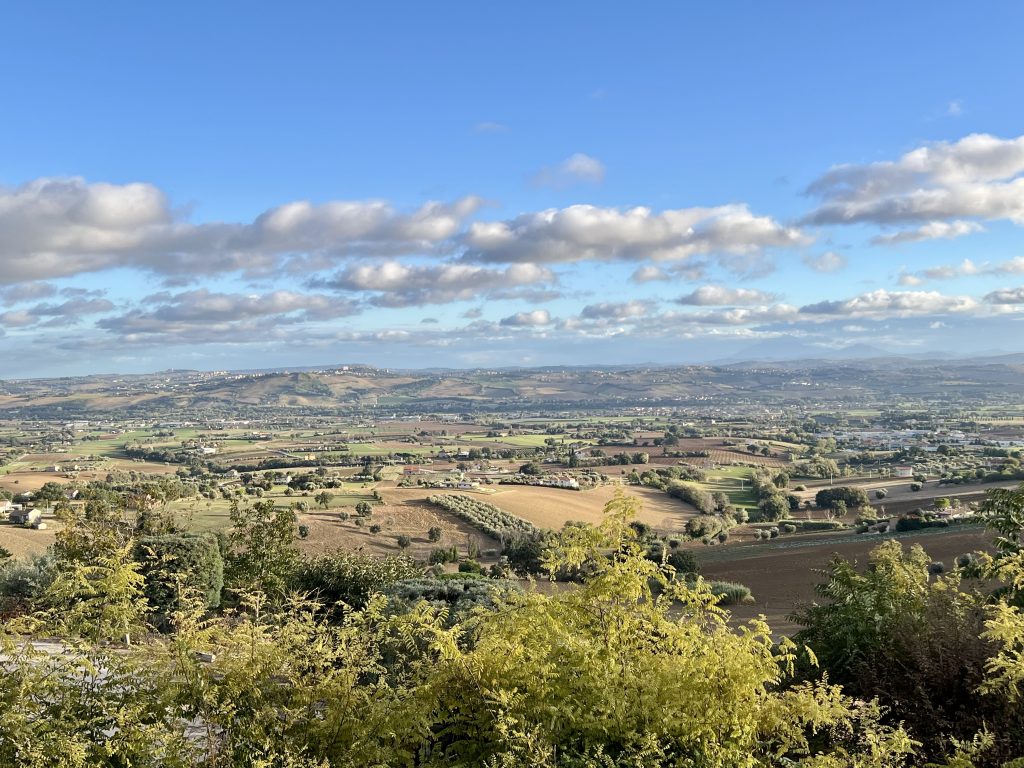
View from Morrovalle
View from Morrovalle. Photo by Heather von Bargen

One of the many special qualities about the Marche is that we don’t have one big museum, church, landmark, or famous artwork. We have thousands of them, smaller in scale, scattered all over. Hidden gems, often not promoted, which can make it a challenge, especially for first-time visitors, to discover our best treasures. 

At Casa Pace e Gioia, I am always available prior to your stay to help plan an unforgettable holiday specific to your interests. Our Digital Guest Guidebook is also full of local advice to help you explore our beautiful area. And here are 5 towns worth a visit, all within about an hour’s drive from Casa Pace e Gioia, all with an amazing lunch recommendation.
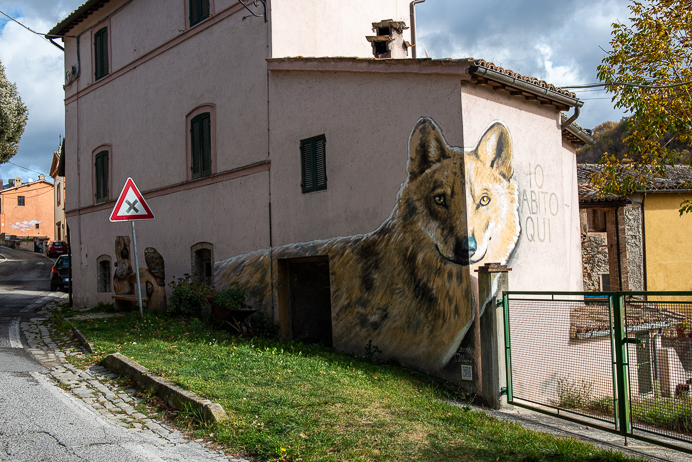
Io Abito Qui Mural in Braccano
A mural in Braccano. Photo by Heather von Bargen

Braccano, the town of murals, is an unforgettable village of only 150 inhabitants with more than 85 murals painted on the exteriors of buildings, city walls, garages, and doors. Many of them are visible from the main road that bisects the town, but signs along the way point you towards others along narrow and winding alleys of this art-filled town.

The mural project started in 2001 with a partnership between the town and art students from 3 universities and has grown to include international artists. It’s about a 50 minute drive. Park in the well-signed lot across the street from the Museum of the Resistance. The road through town is not busy and it’s not a difficult or steep walk. Several hiking trails crisscross the town, which is in the Monte San Vicino and Monte Canfaito Nature Reserve if you’d like to hike.

Lunch at Murales Ristoro, on the main road in Braccano is memorable. In a casual, art-filled and eclectic space, they serve an excellent meat and cheese platter, grilled meat and vegetarian dishes, and an amazing fritto misto.
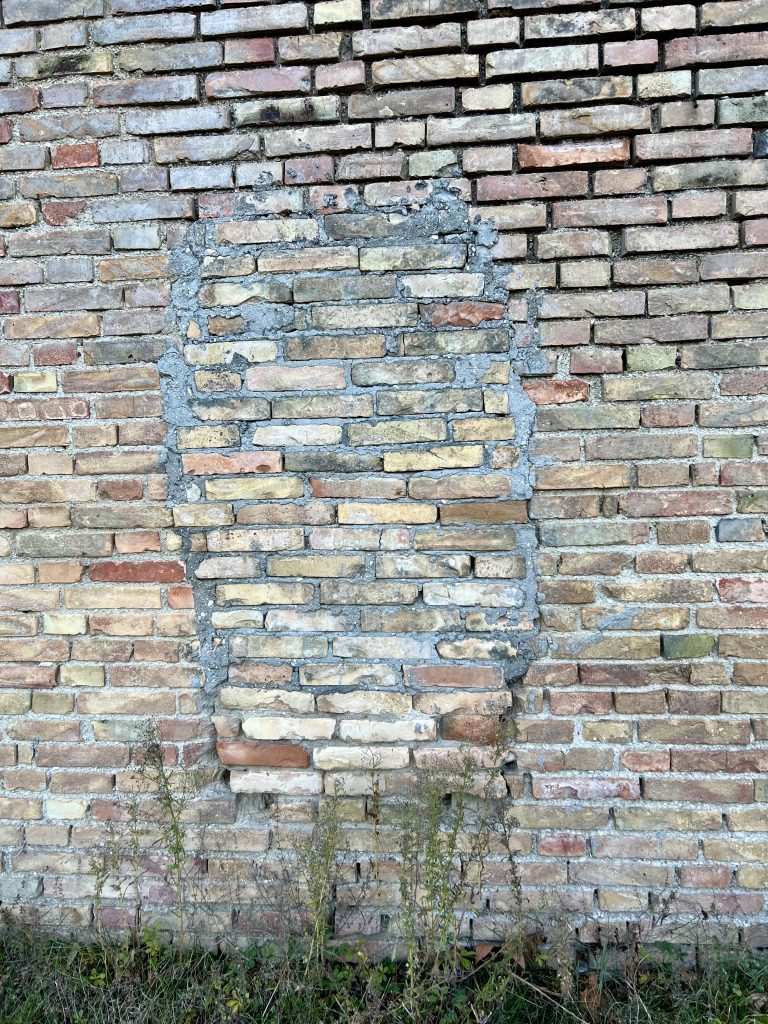
Where the prisoners escaped through the wall in Servigliano
Where the prisoners escaped through the wall in Servigliano. Photo by Heather von Bargen

Servigliano is a uniquely flat and Baroque town laid out in squares 35 minutes southeast of Casa Pace e Gioia. The town hosts a rather large market on Monday mornings featuring locally made hats, scarves, and shoes, in addition to the usual local market offerings.

In 1915 a prisoner of war camp was built in Servigliano to house Austrian and Hungarian prisoners. During World War 2, Greek and Allied soldiers were held here until many escaped in 1943 by making a hole in a perimeter wall. The escaped soldiers took refuge with farm families in the area who hid them. Later, under German control, the Servigliano Camp contained Jewish people from the area who were held here until they were sent to Auschwitz. Only one survived. After the war, the camp served as a refugee center.

Today, the camp serves as a “House of Remembrance.” A museum in the former rail station exhibits the history of the camp, and in the adjacent Peace Park, you can see remnants of the past in the barbed wire and glass shards above the wall, and the repaired area where the soldiers escaped. Guided tours are available and I highly recommend it.

Lunch or dinner is a must at the wonderful Pane e Vino in the historic center of Servigliano. This award-winning restaurant has outstanding local cuisine, a fabulous wine list, excellent service, and a lovely ambiance.
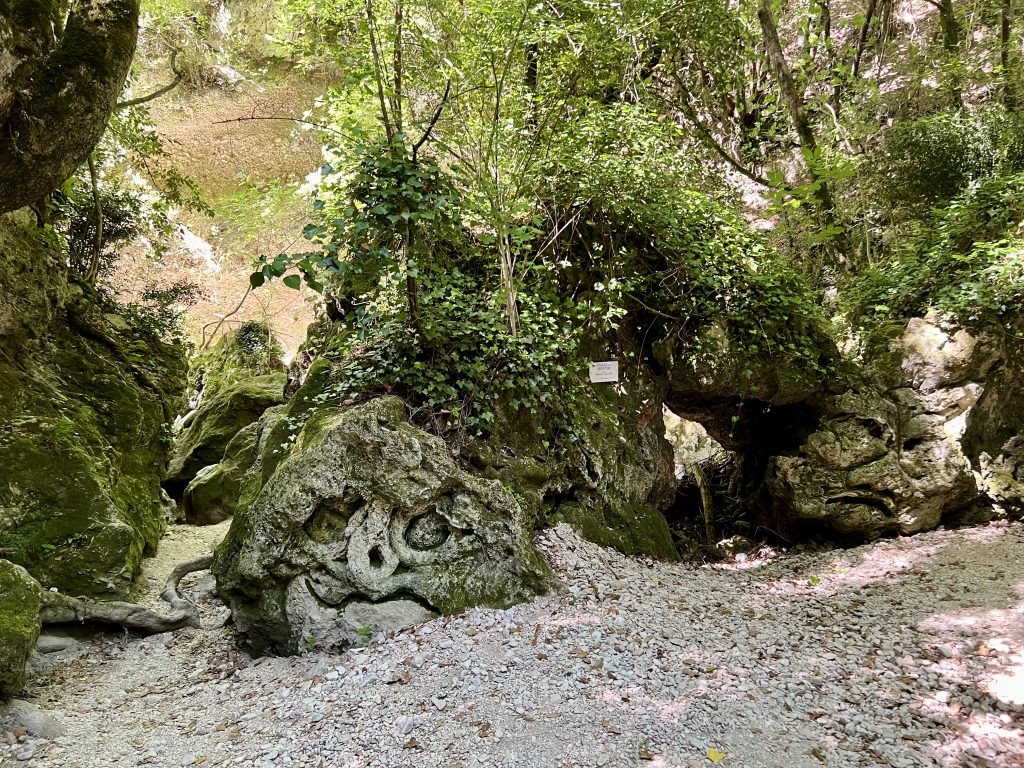
Carved monsters on the Li Vurgacci path. Photo by Heather von Bargen

Pioraco is a beautiful town with tributaries of the Potenza river running through it. Paper has been made here since the 1300s and Pioraco hosts a paper making museum where they demonstrate the process. Walking the back alleys, you can see where each house had an external basin connected to the river to do laundry. A long canal runs from the park at the city center and has picturesque bridges which make a nice walk.

The church of the Madonna of the Caves is very interesting, and inside, you can hear the water dripping from the ceiling of the cave. It is very near the entrance to the walking path Li Vurgacci, with waterfalls and stone-carved “monsters” that winds back towards the historic center. A longer path goes up the hill to a scenic overlook with amazing views of the town and the surrounding area. If you want to hike further, numerous marked trails are in the area.

For a relaxing lunch or dinner, I recommend La Fenice Bistrot, just a short walk from the main piazza. The owner is very welcoming, and the food is fresh, local, and delicious.
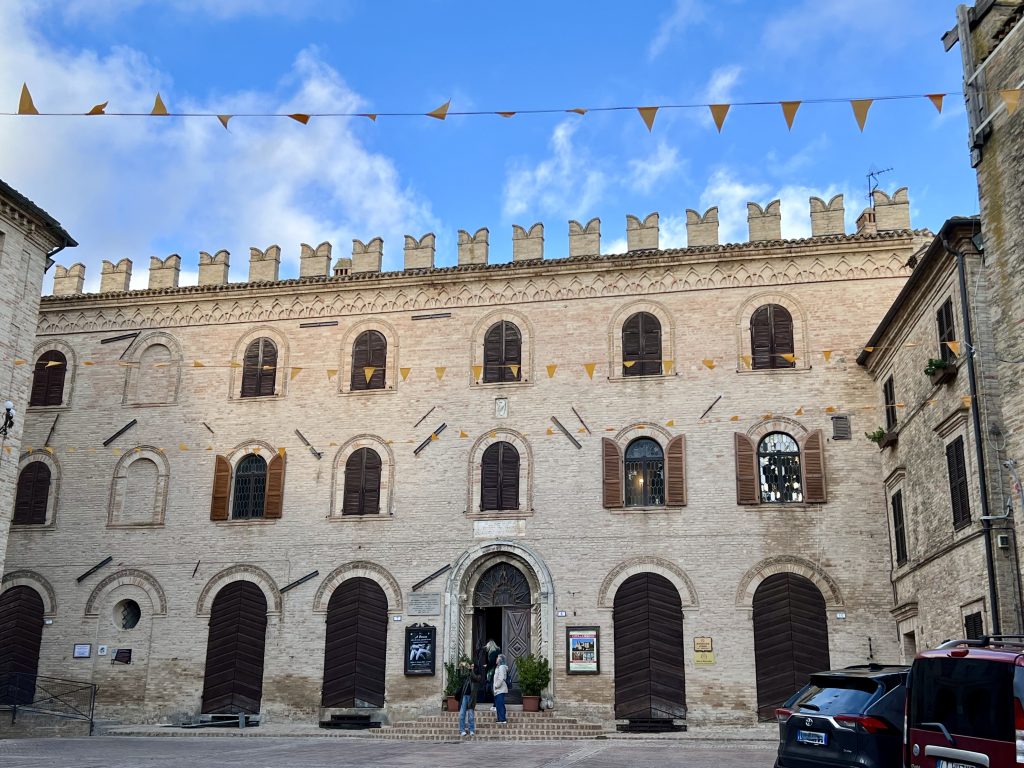
Palazzo Lazzarini
Palazzo Lazzarini. Photo by Heather von Bargen

Morrovalle is a hilltop town said to have been founded by Charlemagne. Pass through the dramatic gate to reach the medieval historic center, in which the Palazzo Lazzarini hosts a portrait gallery, archeological finds from the 13th century, paintings from the 15th-18th century, and an exposition space. The nearby International Museum of Nativity Scenes has more than 800 scenes from all over the world, made with all sorts of materials, on display.

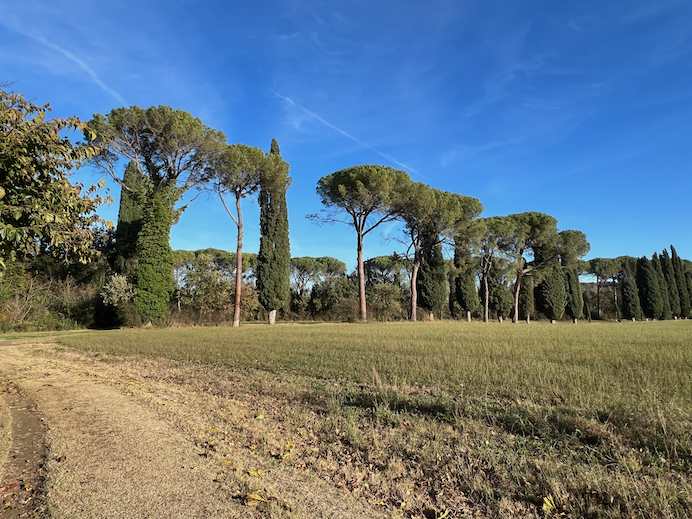
Exiting the city gate, follow the tree-lined sidewalk to reach the observation point with breathtaking views of the valley below.

Enjoy a wonderful lunch (no dinner) at Trattoria Sammartommè just outside the main gate to the town. Reserve in advance as it is a small but fantastic restaurant with homemade pastas, fish and meat dishes, tasty desserts, and friendly service.

Only a ten minute drive from Morrovalle is the Church of Santa Maria a Piè di Chienti, a national landmark since 1902. This interesting two-level church was first mentioned in 936. The current building was constructed in 1125, and had been modified throughout the centuries. It houses luminous 14th century frescoes in an atmospheric environment.
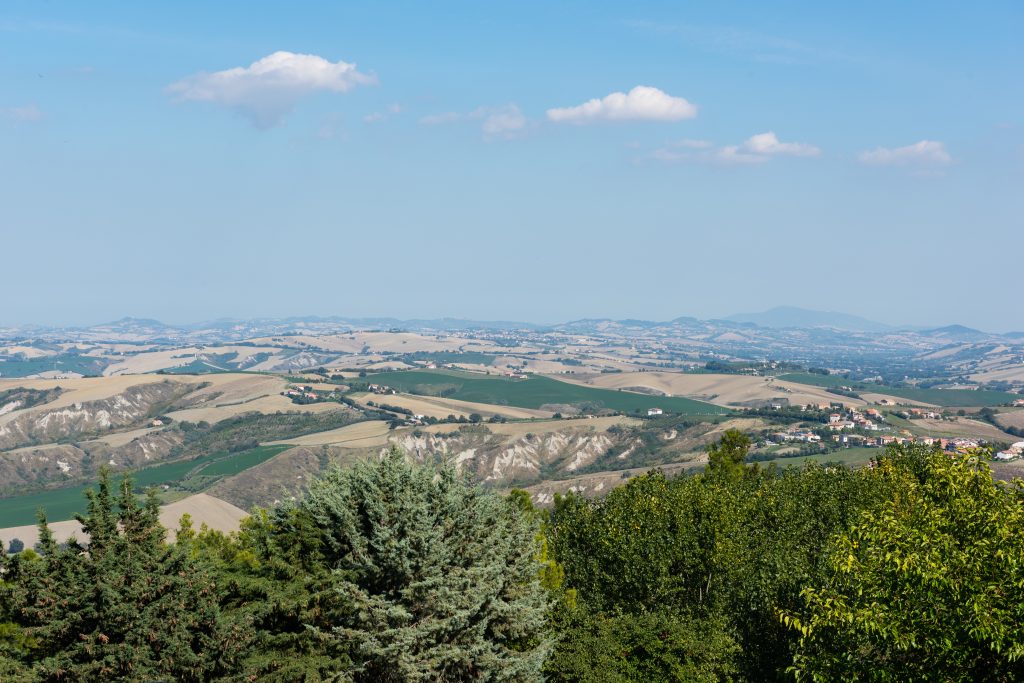
View from Staffolo. Photo by Heather von Bargen

Staffolo is in the heart of Verdicchio wine country and deserves a visit, especially if you’d like to visit a nearby winery. Their 14th century medieval walls are intact and 2 gates lead into the town. The 13th century Church of Sant’Egidio was used as a hospital during the 1591 plague and has a 15th century polyptych. The nearby 13th century church of San Francesco has numerous artworks and a special organ.

Enoteca Vineritage is a wine bar and restaurant that houses a wine museum where you can see the tools winemakers used in the past.

For weekend lunches and weekday dinners, Osteria Vino e Cucina is unbeatable. They are friendly and the food is incredible: fresh pastas, amazing roasted meats, homemade desserts, and of course, great wine.

How Italy’s Marche Region is Meeting the Travel Moment

Le Marche, Italy Countryside
Photo credit: Nazzareno Contiero

Every January I receive emails from travel industry publications with their predictions for travel trends in the coming year. Reading through them this year, I thought that the Marche should have been on everyone’s list as the trendiest destination of 2025. Of course it was not. Which is great. Because one huge reason the Marche is so special is because it is not teeming with tourists. Here is why the Marche is a travel trendsetter.

Dove Le Marche
Graphic from Simone Riccardi

“Detour Destinations” are off the beaten path, are lesser known, are less crowded, and less expensive. They offer an authentic local experience, and are not overtouristed. The Marche region is on the east side of the Italian peninsula bordered by the Apennine mountains on the west and the Adriatic sea on the east, with gorgeous rolling hills and hilltop towns in between.

Ancona, our regional capital, with an international airport and sea port, is the largest city in the Marche with 100,000 inhabitants. Marche is made up of many medieval villages and cities steeped in history with walls and castles. We are a large region with mostly B&Bs and vacation rentals. There are not many large hotels, and not one Marriott.

In many places you might be the only tourist. If you visit a winery, it is probably the owner giving you a tour. In a restaurant, chances are, you’ll meet a family member who owns it. Guided tours are small. The Marche has a long history of craftsmanship and local artisans are happy to share their knowledge. You may be invited to dance with a folkloric group in the piazza.

“Slow Travel” is more of a habit than a trend but it’s also the only way one can travel in the Marche. There is not much that is fast about the Marche. This is, after all, where the shops still close from 1-4 PM every day.

It’s impossible to perform hit-and-run tourism here. Our major sites are spread out and there are so many to see that I suggest travelers stay at least one week, if not two, to begin to discover the Marche’s secrets.

Wine in Glasses

“Wine and Food Tourism” is expected to increase. We have some amazing grape varieties that grow only here. We have talented wine makers who practice largely organic methods to produce unforgettable and special wines. And we have a delicious and varied culinary tradition that relies on the sea, the hills, and the mountains. Some Italian regions are known for one or two special dishes. We have dozens here!

Our vacation rental, Casa Pace e Gioia, is located in the Rosso Piceno region, which produces a lovely red wine made since the 10th century BCE using a blend of Montepulciano and Sangiovese grapes. And we are also in Ribona territory. Ribona, which in the local dialect means “twice good,” is made from a native grape, Maceratino, that grows only here.

Twenty minutes away, in Serrapatrona, another rare native grape, Vernaccia nera, is used to make a red wine in three different styles. Cultivated on only 163 acres by a handful of producers, Vernaccia can be a dry sparking, a sweet sparkling, or a still wine. Each November over two weekends, the wineries open their doors for tours and tastings and the lovely village of Serrapetrona has a festival.

Verdicchio is the white wine the Marche is most famous for and it is cultivated in two regions, Jesi and Matelica. We recommend a tasting at each to compare for yourselves the difference!

For food, the Marche has something for everyone. With mountains and the sea, we are known for our fish stew Brodotto; our better than lasagna, Vincisgrassi; our stuffed and fried Olive Ascolane; our spreadable sausage Ciauscolo; our “cooked wine” Vino Cotto; and myriad other delicious traditions that honor the heritage of this largely agricultural area.

“Calmcations or Quietcations” are for people looking to relax in silence, tranquility, and peace. To escape from the fast pace of everyday life and enjoy simple pleasures, fresh air, and nature. In the Marche one can hike or bicycle in the quiet of the Sibillini mountains, stroll a path at an old abbey church, watch fireflies, look for shooting stars, swim behind a hidden waterfall, bird watch, and admire a carpet of wildflowers, just to name a few.

The pool and grounds at Casa Pace e Gioia

“Joy of Missing Out (JOMO)” is a holiday to reconnect with family and friends in a vacation rental home and reduce stress and anxiety from complicated travel itineraries. Check in to one location, unwind and unplug (if you want), and spend time with your loved ones. The Marche has a variety of vacation rental homes and I would like to promote ours, Casa Pace e Gioia. We can stock the refrigerator for your arrival and have a meal ready to reheat, or arrange for a private chef. We can make plans, arrangements, and reservations so you don’t have to.

Fresh Olive Oil

“Shoulder Season Travel” is predicted to rise, as a way to save money and have a more intimate experience. My favorite months here in the Marche are September, October and May. In the fall, we have the grape and olive harvests. Our guests can watch the olive harvest and visit the olive press and see our oil being made. Fall food festivals abound! May brings the poppies and wildflowers and the promise of spring when the food festivals start.

Lastly, the 2025 Jubilee will largely impact Rome, where they expect 30 million visitors this year. We are a three hour drive from Rome but our local Basilica di San Nicola in Tolentino is one of 7 churches in our province where the faithful who visit can receive the Jubilee indulgence.

Who knows what this year’s travel future holds, but we hope to see you in the Marche!

The 10 Best Hikes in the Marche

The Marche, with our mountains, hills, valleys, canyons, caves, rivers, and the sea, offer memorable trails for everyone. Our list of favorite places to hike gets longer every season but these picks offer the best opportunity to enjoy our spectacular nature in unforgettable settings.

Walking path at the Abbadia di Fiastra
One of many paths at the Abbadia di Fiastra

Riserva Naturale Abbadia di Fiastra
The Fiastra Abbey was founded in 1142 and it is one of the best-preserved Cistercian abbeys in Italy. The monks drained the marshy land, grew grapes for wine and established a still-flourishing farmland. It has since become a large natural park with mostly flat paths that traverse along the Fiastra river and through a variety of woodland areas. A large lawn is perfect for picnics and letting the kids run around. Several excellent restaurants in the park offer a chance to take a break and enjoy the quiet nature. It’s a serene and relaxing place that is well loved by locals.

Roman Theater in the Parco Archeologico in Urbisaglia
Roman Theater in the Parco Archeologico

Parco Archeologico Urbs Salvia
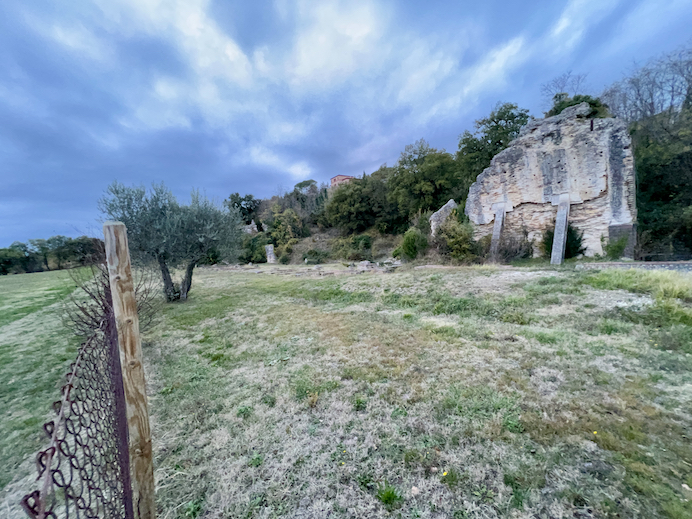
First-century ruins of a Roman city were preserved by a landslide and are being excavated among the 40 hectare archeological park. A one kilometer walking path from the Amphitheater and Temple travels along the ancient city walls and up to the theater and gives you an idea of how large the city once was. It’s another place popular with locals and very accessible with ample parking and public bathrooms.

Lame Rosse
Lame Rosse

Lame Rosse
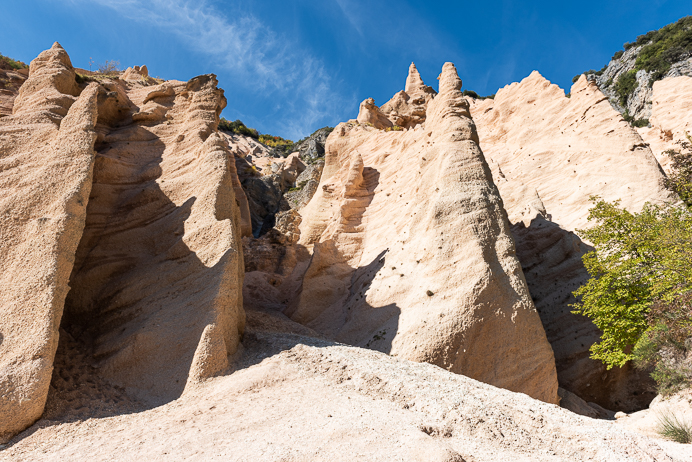
The “red blades” or Lame Rosse is often called the Grand Canyon of the Sibillini mountains. It’s a very popular destination and several guides offer sunset and evening hikes to the incredible towering rock formations created by centuries of erosion. A 7-kilometer round trip trail starts at the Fiastra Lake dam, with great views of the lake, and proceeds through the shaded woods until the end, where an uphill trek on sand and gravel leads to the Lame Rosse. Bring water and wear sturdy shoes.

Gole dell'Infernaccio
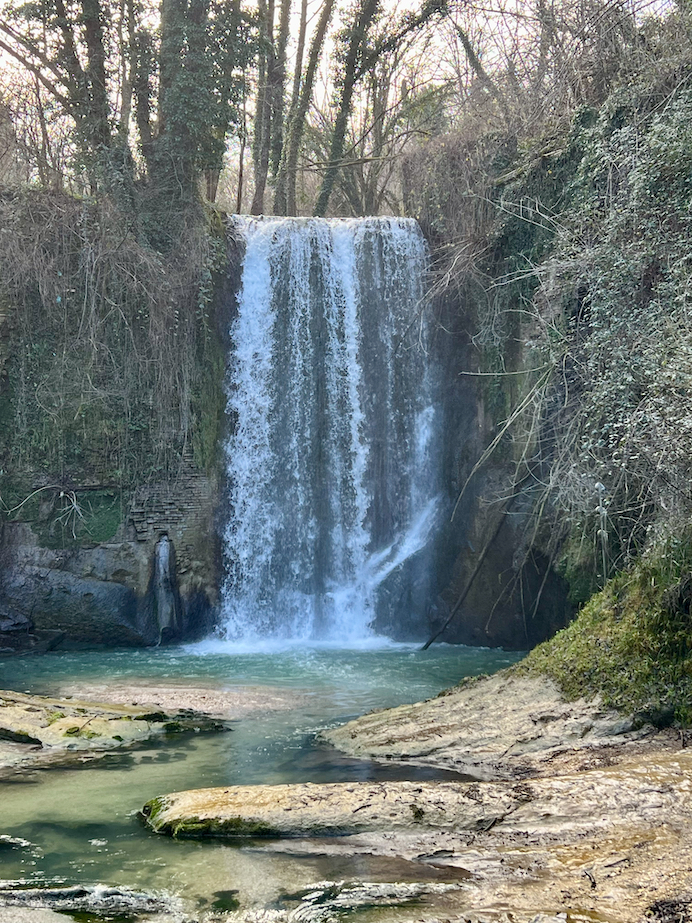
Behind a waterfall at the Gole dell’Infernaccio

Gole dell’Infernaccio
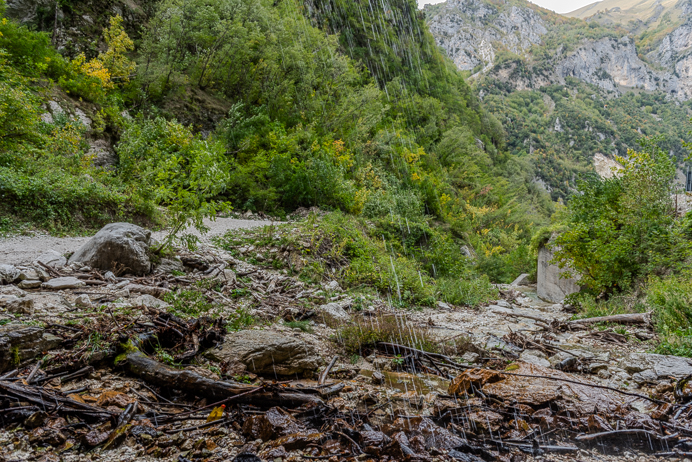
The “Gorge of Hell” in the Sibillini Mountains was formed over the centuries by the Tenna River. It’s a spectacular hike in the summer or fall to enjoy the shade, the cooling waterfalls, and the autumn color change in the beech trees that line this ancient path that connects two valleys. Footbridges that crisscross the river make this a much easier trek nowadays. Two deviations off the path lead to the source of the Tenna River and the Hermitage of San Leonardo. It’s about 9.5 kilometers round trip taking the Hermitage route.

View of Lotignano
View of Lotignano

Santa Lucia to Lontignano
Park by the church of the tiny village of Santa Lucia and continue for about 700 meters on the unpaved road with beautiful open views of the Sibillini mountains. When you reach the sign for Lontignano, follow it right and it becomes more forest with shade trees. After going mildly downhill and then slightly uphill for 2 kilometers, you reach the mostly abandoned hamlet of Lontignano, which sits on the side of a hill in a very serene setting that’s like going back in time. It’s an easy beautiful hike year round.

One of the hidden waterfalls in Sarnano
One of the Hidden Waterfalls in Sarnano

The Cascate Perdute in Sarnano
Three hidden waterfalls were uncovered in 2020 near Sarnano’s beautiful historic center and they are easily reached on well maintained paths. It’s an easy 6 kilometer round-trip walk on mostly flat terrain except just before the Ancient Mill Waterfall. Suitable for all ages, and enjoyable year round. Plus you can enjoy a gelato in Sarnano afterwards!

The Percorso Kneipp
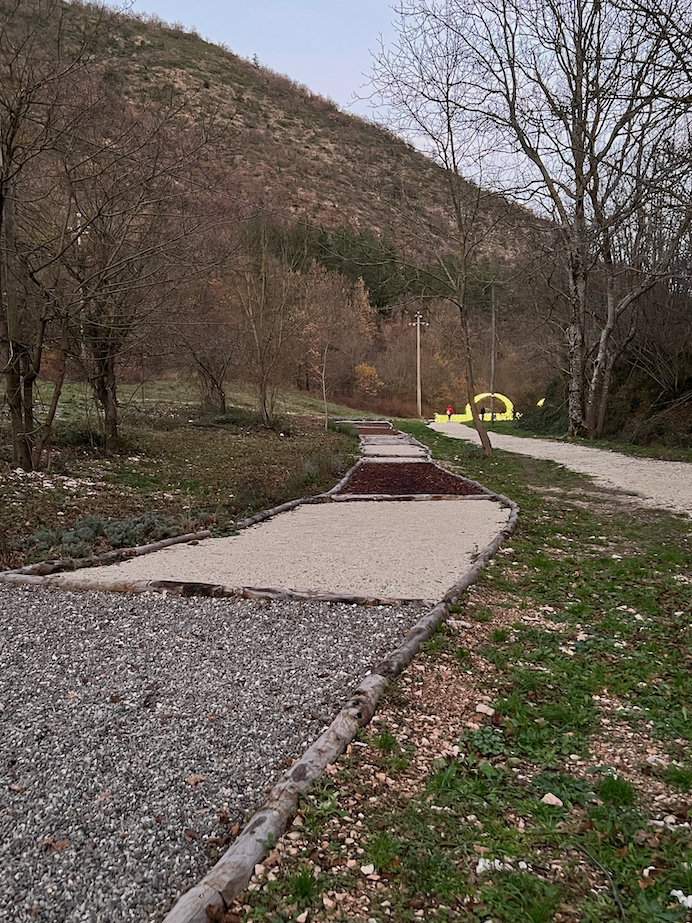
The Percorso Kneipp

Sentiero delle Acque and the Percorso Kneipp in Pieve Torina
The Path of the Waters follows a river and is mostly flat and shaded. The Percorso Kneipp at the beginning of the path offers you an opportunity to walk barefoot through the water, over sand, stones, wood, and other sensory environments. In the winter, it is decorated with holiday lights and a Christmas tree. Continuing along the river, the path leads past an ancient Roman bridge where a deviation leads up the road to the Hermitage of the Saints. Depending on the season, you might find several waterfalls on the route. At the end of the path, you reach a tiny village, and continuing through it, you find the ancient mill and a cave. It’s about 4 kilometers to reach the mill without the Hermitage deviation. The path is well maintained with mild elevation change.

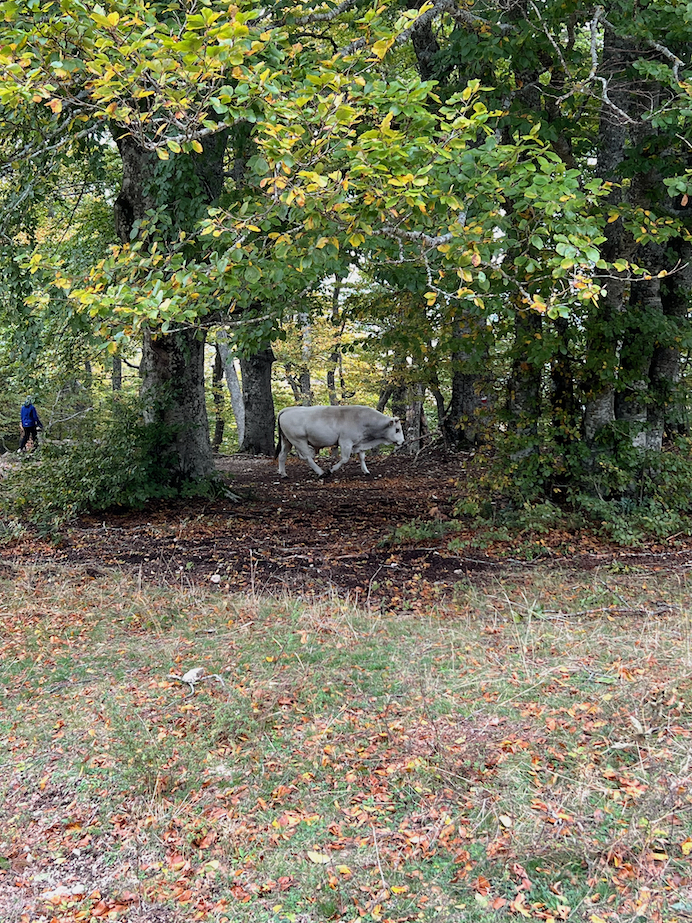
Cow in Confaito
Cow in Confaito

Natural Reserve of Monte San Vicino and Monte Canfaito
Popular year-round, Monte Canfaito shines particularly during the autumn foliage. This large regional park is a popular destination for the old beech tree forest that glows golden when the colors change and provides welcome shade in the summer. Easy paths reveal splendid views of the landscape and pass large cows idling nearby. It’s a fantastic place to relax and picnic.

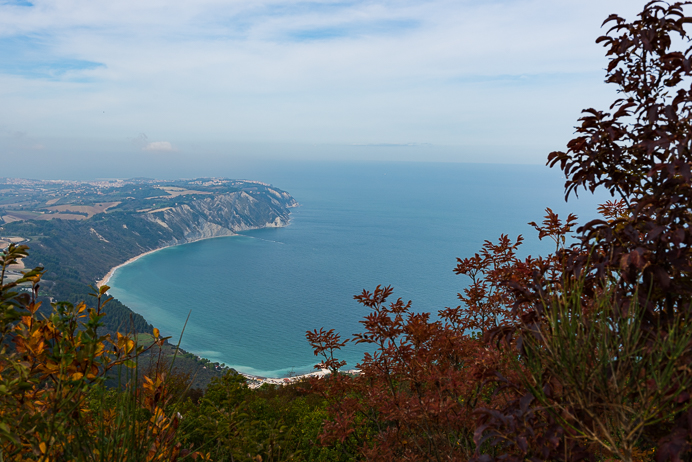
View of the Adriatic coast from a path on Monte Conero
View of the coast from a path on Monte Conero

Parco del Conero
The park at the top of the Conero Mountain has a variety of well-marked hikes of varying lengths and skill level, some with amazing views of the coastline below. Fantastic foliage, a variety of trees, and a lot of birds offer something for everyone. There are bars, restaurants and facilities to rest and replenish.

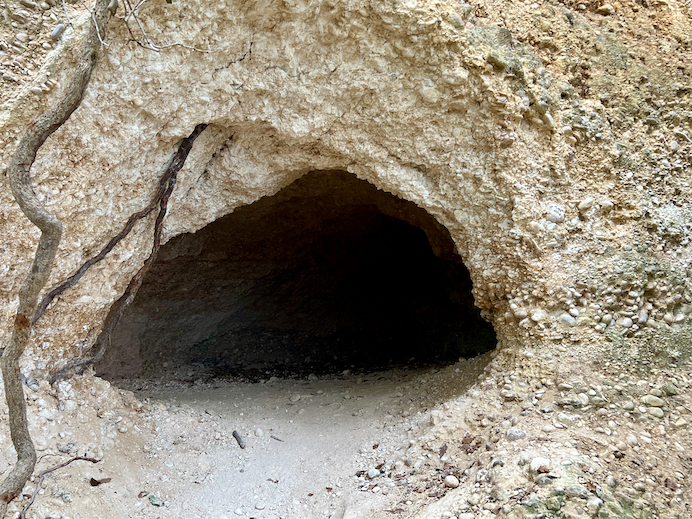
The Lovers Cave in Torre di Palme
The Lovers Cave

Sentiero nel Bosco del Cugnolo in Torre di Palme
The Path of the Cugnolo Forest is outside the city walls of Torre di Palme, a village considered one of the most beautiful in Italy, and worth a visit itself. The path leads through the shaded woods and a lot of wild plants, as the views and sounds of the city fade away. The main attraction along the route is the Lovers Cave, where a young couple hid for a few nights as they evaded his enlistment orders to fight in Libya. They threw themselves off the cliff rather than be separated. The cave is reachable with the help of a provided rope. The rest of the path is an easy walk.

These are just a small handful of memorable hikes in our area. We personalize our advice for our guests and are always happy to suggest others.