Local dishes to try in the Marche

Cinghiale with Polenta
What to eat in the Marche
Cinghiale with Polenta

In the Marche we are lucky because we have the largest variety of traditional local foods in all of Italy. You could stay two weeks and try a different dish every day. 

We have our beautiful geography to thank. The Sibillini mountains to our west provide truffles, sheep, cheeses, cattle, chestnuts, and boar. Countryside foothills abound with wheat, vegetables, olives, and fresh produce. Area farms raise pigs, chickens, ducks, and rabbits. And the Adriatic to our east supplies not only our area, but all Italy with an abundant variety of fresh fish and seafood. 

Our location also reflects our food heritage. Being just over the mountains from Rome, and connected by the ancient Via Salaria, we have Roman influences. Greeks and North Africans landed on the coastline and settled, imparting some of their culinary customs. So there really is something for everyone, no matter what your food preference is. 

15 of our favorite “Must-Try” Traditional Marchigiani foods

Vincisgrassi at Il Sigillio
Local dishes in the Marche
Vincisgrassi at Il Sigillo, Camporotondo

Vincisgrassi is a multi-layered lasagna that originated in Macerata. Everyone makes it a little differently, and some use vino cotto in the pasta dough. The meat and cheeses used can vary but often include veal, prosciutto, chicken livers and giblets. Historically it was made at special occasions but it’s often a menu item, and surprisingly light considering the many layers.

Ciauscolo, or ciabuscolo is a pork sausage made with highly ground meat and often white wine or vino cotto. It is lightly smoked and dried in a cool place for a couple of months. Eaten raw as an antipasto, it is often spread on bread. It’s also delicious as an ingredient in filled pasta or polenta. 

Brodetto is a fish stew famous along the coast. It is thought to have been invented in Athens and spread throughout the Mediterranean by the Greeks. Each town makes their own version and asserts it as the best. I have 5 different recipes for it in one Marche cookbook. Every preparation calls for an assortment of fish, often as many as 13 types. Scorfano, or scorpion fish, is almost always included in a traditional Marchigiano Brodetto

Olive Ascolane, fried olives
Typical food in the Marche
What to eat in Marche
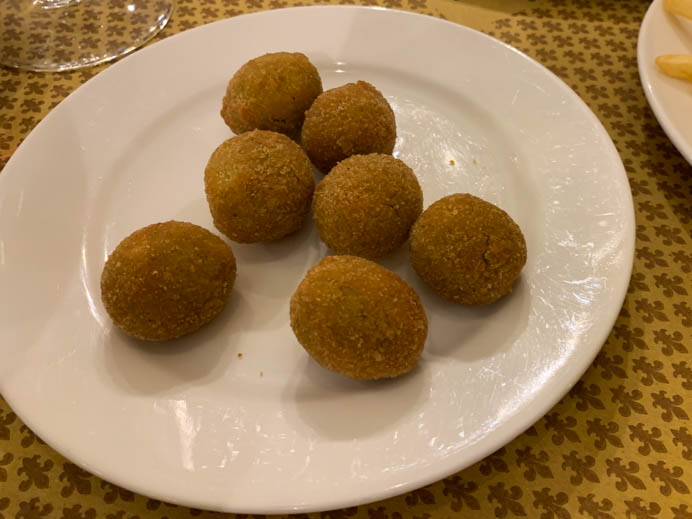
Olive all’Ascolana at L’Antico Approdo

Olive all’Ascolana, or fried stuffed olives are ubiquitous at restaurants and as street food, and originated in the Ascoli Piceno province just south of Casa Pace e Gioia. Perfect as an appetizer, local Ascolane olives are pitted, stuffed with a meat mixture, breaded and fried. The filling can vary but typically includes a meat mixture with nutmeg. Vegetarian options exist and the Montelupone artichoke stuffed and fried olives are fabulous! 

Cinghiale con le Pappardelle or wild boar with pappardelle, can be found in other Italian regions but what distinguishes a Marchigiano dish is wild fennel, which grows abundantly in our area and complements the flavor of the boar. The boar is marinated at least overnight, if not for days, prior to making the sauce. 

Bistecca di Scottona Marchigiana, a grilled steak of a young, prized Marchigiana cow which has IGP status, a symbol of high quality. The Marchigiana is a powerful white cow with muscles that have an excellent proportion of fat to create a succulent marbled meat. Until the 1950s they were also used as working animals. 

Coniglio in Porchetta, what to eat in the Marche
Coniglio in Porchetta at Il Santo Bevitore, Tolentino

Coniglio in Porchetta, or Rabbit with Wild Fennel is a local traditional dish for both the rabbit and the wild fennel, two Marchigiani trademarks. Preparations vary, and sometimes the rabbit is stuffed, but the ingredients always include pork, wild fennel, and garlic. 

Porchetta Roasted pork, not to be confused with Coniglio in Porchetta, above. Is roasted pork usually served as street-food style sandwiches, is popular throughout Italy, but is distinguished in the Marche again by the presence of wild fennel. Historically, the Marchigiani prepared a porchetta for the festival celebrating the wheat threshing. 

Cicoria, or chicory is on almost every menu in our region. Indeed, it grows wild in between our grapevines. These slightly bitter leafy greens are usually boiled, then tossed in a pan with olive oil, chili pepper, garlic, and salt. It’s a must-try, at least once. 

Cappelletti in Brodo di Cappone, 
What to eat in the marche
Cappelletti in Brodo di Cappone at L’Antico Approdo

Cappelletti in Brodo di Cappone is a homemade pasta stuffed with a mixture of cooked veal, chicken, pork, mortadella, and parmesan cheese, then folded to resemble a hat (cappelletti). They are served in a delicious capon broth. In the past, this was served only at Christmas but nowadays is available in the fall-spring seasons. 

Agnello allo Scottadito is seasoned lamb roasted over a hot grill and served so hot it will “burn your fingers” (scottadito). It’s often included in a “mixed grill” dish. This is Matt’s all-time favorite. 

Pecorino dei Monti Sibillini is one of our many fantastic local cheeses. This one in particular is in the Slow Food Presidium and is slightly aged. Cheeses are often featured on antipasti platters or as a dessert. You can also find it at weekly markets and the grocery store in Colmurano. 
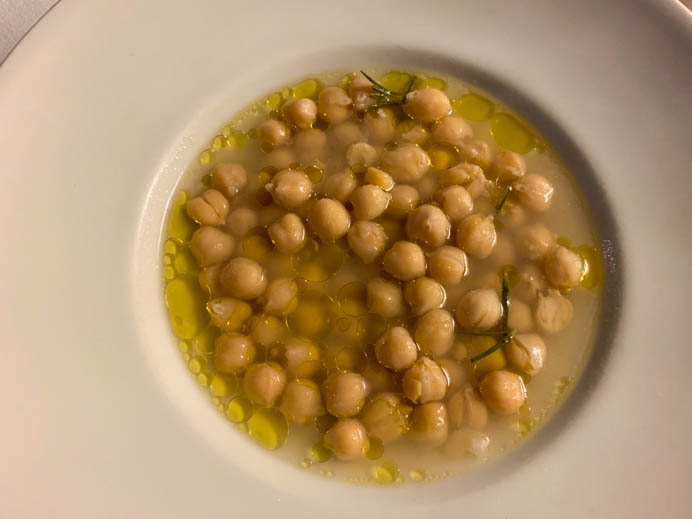
Chickpea soup, zuppa di ceci, what to eat in Marche
Chickpea Soup

Chickpea soup (zuppa di ceci) was often consumed by local farm families because chickpeas were cultivated locally and they could be stored for a year. It’s often featured on menus and is really delicious. Sometimes prosciutto is added but usually it’s a vegetarian dish. 

Gnocchi with Duck Ragu is typically slow cooked in a sauce of red wine, tomatoes, and herbs until the duck meat falls from the bones. Fresh potato gnocchi are folded into the sauce. It’s especially popular around our nearby area, especially the Abbadia di Fiastra. 
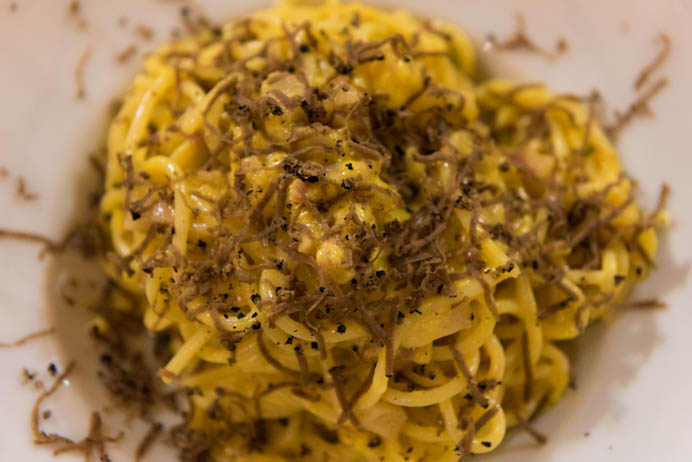
Carbonara al Tartufo, Carbonara with Truffles, what to eat in marche
Carbonara al Tartufo

Truffles with anything. The Marche is internationally underrated for our truffles but we have both white and black varieties, which makes our truffle season longer. If fresh truffles are available you will see them on menus (tartufo). My favorite is truffles shaved on top of carbonara. 

Buon appetito! 

Ten Things to do in the Marche if it Rains

Summers are usually sunny in the Marche but if the forecast calls for rain, here are some ideas to enjoy your vacation at Casa Pace e Gioia regardless of the weather.

Frasassi Caves, Ten Things to do in the Marche if it Rains
Photo from Grotte di Frasassi

1. Go underground at the Frasassi Caves

It’s just over an hour’s drive from Casa Pace e Gioia, and I always recommend that our guests explore the largest cave system in Europe, even when the weather is beautiful. The largest room in the 30-kilometer complex, the Ancona Abyss, could hold Milan’s massive Cathedral. Guides lead visitors on a 1500-meter walkway that take you past shimmering crystals, an underground lake, spires, pinnacles, rock formations, stalactites, and stalagmites. Pre-registration is required, and tours are offered in a variety of languages. Bring a sweater as the caves are kept at 14°C (57°F) year-round. 

While you’re there, see the nearby Temple of Valadier, an octagonal church that is built inside of a cave and is a favorite Instagram post. 

Poltrona Frau Museum, Ten Things to do in the Marche if it rains.
Poltrona Frau Museum

2. Visit Tolentino’s museums and monuments.

Only 15 minutes away from Casa Pace e Gioia, in Tolentino you can visit our local landmark, the Basilica di San Nicola, a 13th-15th century church famous for housing the remains of St. Nicholas, who was a hermit and preacher to whom many miracles were attributed. People from all over the world pilgrimage here in veneration. The complex is still under restoration from the earthquakes of 2016 but most of it has reopened. The lovely Cappellone di San Nicola is beautifully frescoed and the cloister is peaceful and suggestive. 

Just two blocks away from the Basilica, and facing our famous clocktower and the Piazza della Libertà is the MIUMOR, the International Museum of Humor in Art. The Museum hosts a notable International Biennale in odd-numbered years but displays artworks including caricatures, cartoons, and sculptures year-round. Locals always recommend a visit and it gets great reviews. It’s a quirky and fun way to spend some time indoors. 

In the same piazza, the bar Pasticceria Zazzaretta has outdoor seating under a loggia if you want to stop for a snack or coffee. For lunch options, I suggest il Santo Bevitore, just down from the clocktower, or Osteria San Nicola, a few blocks away at via Flaminia, 6. 

Three kilometers east of Tolentino’s historical center and just off via Nazionale, the Poltrona Frau Museum is a 1400 square meter space devoted to recounting the history and achievement of the legendary furniture-making firm founded in 1912. You can get a glimpse of how their handcrafted furniture is made through exhibits and videos and see their leather in a Ferrari. The outlet store to the left ships internationally and has unbeatable prices. 

Four kilometers east of the Poltrona Frau museum is the well-preserved 14th century Castello della Rancia, a former castle that now houses an archeological museum and often hosts special exhibitions. The view from the tower is fantastic on a clear day, but the rest of the castle is still worth a tour in the rain. 

The abbey church at Fiastra, Ten Things to do in the Marche if it rains.
Entrance to the church at the Abbadia di Fiastra

3. See the church and museum at the Abbadia di Fiastra

The nature reserve at the Abbadia di Fiastra is splendid in fine weather but if it rains, take the opportunity to visit one the 12th century Abbey Church, one of the best-preserved Cistercian abbeys in Italy, with its frescoes and rose window. Tour the adjoining monastery’s cloisters, chapter house, refectory, Cellarium, wine museum, gardens, and the olive oil storeroom that now houses archeological finds from the ruins of Urbs Salvia. Also in the park is the 18th century Palazzo Giustiniani Bandini, owned by the last heir of the property which is now managed by his foundation. 

Several terrific restaurants and bars in the park are open for lunch or a refreshment. 

Marchecraft, Ten things to do in the Marche if it rains.
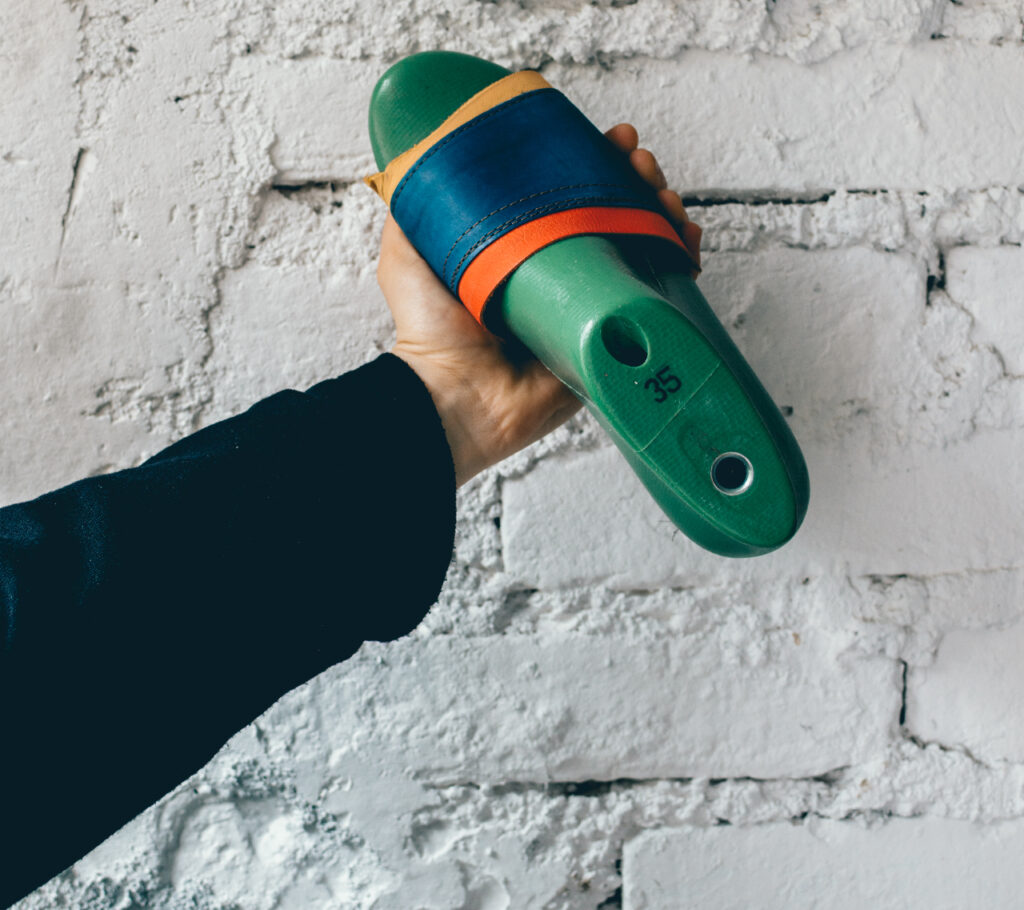
Grazie to Marchecraft for the photo

4. Meet a local artisan and make your own souvenir

The Marche region has a long heritage of high-quality craftsmanship. Marchecraft recognizes this and has sought out talented artisans to share their techniques with visitors. And in many cases, you’ll get to take home your own Made in Italy souvenir. You can make your own sandals, pottery, paper, jewelry, traditional tambourine, and more! Several experiences are suitable for children. The duration of the experiences vary by type and they are located throughout the region. 

5. Head to Macerata

The sun always seems to shine on Macerata, even when it’s storming here. So you might get lucky and it won’t be raining there, but even if it is, some of Macerata’s best sites are indoors. Macerata is a 30 minute drive and I suggest parking at the Parcheggio Centro Storico, which is covered and has an art-filled tunnel and an elevator to reach the city center. 

The Sferisterio, a gorgeous, elliptically shaped arena, is a must see, although part of it is outdoors. It opened in 1829 after 100 private citizens raised the funds to design and build a venue large enough to play the Roman ball game pallone al bracciale, and to hold circuses and bullfights. 

Twentieth century Italian art is displayed in a 17th century palace with period furnishings, in a unique and intimate setting at the Galleria d’Arte Contemporanea housed in the Palazzo Ricci.

The Palazzo Buonaccorsi has three museums. The notable Carriage Museum in the basement displays a variety of vehicles throughout history. In frescoed rooms on the first floor the Pinacoteca displays 14th-18th century art, among them a Carlo Crivelli. And on the second floor, the Galleria d’Arte Moderna has works by 19th century Italian artists. 

The Basilica della Misericordia is the world’s smallest basilica and a national monument. The interior, with ceiling frescoes, paintings, and gilded accents is gorgeous and peaceful. 

For lunch or dinner in Macerata I suggest Osteria dei Fiori. The Carducci family serves typical Maceratese cuisine in an elevated style, with excellent local wines. Covered outdoor seating is available and their spacious interior is inviting. 

Chefaway pasta demonstration, Ten Things to do in the Marche if it rains
Chefaway demonstration at Casa Pace e Gioia

6. Stay at home and have Chefaway come for an in-house food demonstration.

Our friend Andrea at Chefaway has put together memorable experiences that introduce you to local food traditions and techniques. They offer pizza making, cheese making, pasta making, and gelato making experiences; hands-on cooking classes, and a local dinner experience. Create your own combination or just enjoy one. They can do all of the demonstrations in the house and the loggia and it would definitely entertain children. 

Vino Cotto tasting at Cantina il Lorese

7. Taste local wines!

Most of our local winemakers are available on a short notice to visit. It’s often raining when we visit Saputi down the road during our spring and fall visits. Giovanni at Fattoria Colmone della Marca has a huge tasting room with expansive views. Terre di Serrapetrona also has a lovely vista that you can admire from indoors. Sandro at Podere sul Lago has a gorgeous barrel storage room and is happy to give you a tour of his cantina and tasting room. For something special and very local, visit Cantina Il Lorese to try “cooked” Vino Cotto. Their underground cellar is very suggestive. I can assist with reservations. 

8. Visit Ancona

The region’s capital is about an hour’s drive and perhaps it won’t be raining there? Founded and settled by Greek mariners in the 8th century BC, Ancona thrived as a trading port city. The Romans came and further elevated the city’s status. For five centuries, Ancona was a powerful independent Maritime Republic until 1532 when it came under papal control until the French invaded in 1797.  This rich history has given the city a unique mix of architectural styles and sights to see.

Trajan’s Arch, a famous landmark, is outdoors but many other sites are indoors.

The Museo Tattile Statale Omero is a museum for the blind and a good choice for those with children. Upon entering, you are offered a blindfold and encouraged to touch the many sculptures that are replicas of famous artworks. (They have strong Covid-19 prevention protocol in place and encourage advance booking.) 

The 11th-13th century Duomo di San Ciriaco overlooks the city, shimmering in white stone. It requires an uphill climb, but the views of the city are superb, and the architecture is notable. Some of the floor is glass, allowing you to see the pagan ruins on which the church was built. 

Set in a 16th century palazzo with beautiful ceilings, the Museo Archeologico Nazionale delle Marche displays archeological finds from the region from Prehistoric times until the Middle Ages, with artifacts from the cultures that have made their imprint on the Marche such as the Picene civilization, the Celts, and the Romans. 

The lovely Chiesa Santa Maria di Piazza has a gorgeously carved exterior and a priceless 16thcentury crucifix. Mosaics from earlier churches from the 5th and 6th century are visible in the crypt. 

Chefs Andrea Tombolini and mother Natalina

9. Take a cooking class

We have several cooking class options. One recommendation is to learn how to make typical dishes from a highly regarded chef, Andrea Tombolini at Locanda le Logge, in nearby Urbisaglia, one of our recommended restaurants. He can come to the house, but I’d suggest the short drive to cook in the restaurant’s kitchen. I can also arrange a class just down the road with our housekeeper Claudia.

10. “Made in Italy” Outlet Shopping

A lot of what is “Made in Italy” is made in the Marche. Well-known brands and private-label producers alike offer discounts at their outlets. Leather bags, accessories, shoes, ceramics, and clothing are among the most popular items. A Google Map of our recommendations is here.  

Book your Marche vacation at Casa Pace e Gioia here.

Things to do in Le Marche in the fall

The grape harvest (vendemmia) at Podere sul Lago, Serrapetrona.

Le Marche’s unforgettable autumn experiences spotlight the region’s natural treasures and celebrate Le Marche’s fabulous local foods and wines. Temperate weather brings gorgeous morning fog to the valleys and golden afternoon light, making this a prime time for outdoor pursuits. Autumn in Le Marche means grape and olive harvests and an abundance of food and wine festivals.

Here are our suggestions for the top 7 fall activities da non perdere (not to be missed) in Le Marche:

1. La Vendemmia – The Grape Harvest!

In Le Marche, grapes are picked by hand in September and October, depending on the weather. Most winemakers welcome visitors to watch the winemaking process that starts immediately after harvest. If you’re lucky, a local winery will host a harvest meal among the vines. It’s an unforgettable event.

2. Hike the Sibillini

Burn calories and enjoy fall’s changing colors on a trek in the Sibillini Mountains. Organized group hikes in the autumn are often themed for photography, wildlife, and food. One event starts with chestnut collecting, followed by a lunch of typical products, and ends with a hike to the beautiful Gole dell’Infernaccio.

3. La Raccolta delle Olive – The Olive Harvest

Olives and olive oil from Le Marche have a centuries-old history of renown and quality. The harvest typically starts in October or November and is done by hand or with mechanical help. You can watch the olive collecting, or even try your hand at it. After the olives are picked they are brought to a local frantoio to be washed and pressed to become savory extra virgin olive oil. Visit a frantoio to see it done and for a memorable olive oil tasting.

Olives at Frantoio Agostini. Photo from Frantoio Agostini

4. Party at a sagra – Food festivals!!!

It seems that every weekend in the fall, at least one village, if not many, throw a festa to celebrate a local food tradition. San Severino Marche’s Sagra della Porchetta, Macerata’s Street Food Festival in early October, and Colmurano’s Borgo in Festa are just some of the many weekly events that include live music, shows, food stands, markets, and children’s activities. Our website has a list of events and sites to check to see what’s happening.

Festa in Macerata, photo from Comune di Macerata

5. Drink fabulous wine at Appassimenti Aperti

Le Marche’s unique and delicious Vernaccia di Serrapetrona wine is made with native grapes, typically in three diverse styles (two sparkling). Often, the grapes are dried for three months to concentrate the flavor. On the second and third Sunday in November, Serrapetrona’s area wineries open their doors for guests for tours and to see the dried grapes. The lovely village of Serrapetrona hosts a festa with food and wine stands, a market, and music.

Vernaccia nero grapes drying. Photo from Appassimenti Aperti

6. Get your White Truffle fix

Every November, Amandola celebrates its famed Tartufo Bianco at Diamanti a Tavola. In addition to the live music, markets, and local food stands you’d expect, you can partake in a truffle hunt or dine at a gourmet dinner prepared by notable chefs who pay homage to the white truffle.

White truffles. Photo from Diamanti a Tavola.

7. Admire the changing fall colors

Although there are many beautiful forests in the Marche where you can photograph fall foliage, the nearby Parco del Monte San Vicino is where I would start. The Confaito Beech Forest’s century-old trees are a splendor of colors in autum. The oldest tree is around 500 years old and on a list of the 300 monumental trees in all Italy. In the same park, another path leads through the woods and reaches the summit of the mountain from which the view is breathtaking.